Bingo has a mathematical skeleton that most players never bother to examine. A ninety-ball room and a seventy-five-ball room can carry noticeably different return rates, and the difference between them, over hundreds of cards, adds up to real money. Most people treat bingo as pure chance - buy a card, wait for numbers, hope for a full house. That approach ignores the fact that bingo rooms, like slot machines, are built on programmed payout percentages that can be measured, compared, and used to a player's advantage.
This is where the conversation shifts from luck to arithmetic. Lucky bingo payout structures vary between platforms and game variants, and understanding them changes how a player selects rooms, times their sessions, and sizes their bets. A useful comparison exists on site, where a specific bingo title lays out its mechanics clearly enough to study before committing real stakes. Once you see how payout percentages are disclosed and structured, the entire game stops feeling like a black box.
The sections below break down lucky bingo odds, explain how a bingo RTP calculator works, and outline a practical lucky bingo strategy for identifying the best bingo games available right now. None of this removes chance from the equation - bingo remains a game of probability - but it does let players make informed decisions instead of guesses.
Understanding Lucky Bingo Payout Structures
What Payout Percentage Actually Means
Payout percentage, more formally return to player (RTP), describes the theoretical proportion of all wagered money that a game returns to players over a large number of rounds. A bingo variant advertising a 90% RTP is expected to pay back 90 cents of every dollar wagered across thousands of cards dealt - not to any single player, but across the entire population of players over time. This is a long-run average, not a promise for any individual session.
How Prize Pools Are Calculated in Bingo Rooms
Unlike slots, where payout comes from a fixed algorithm tied to symbol combinations, many bingo rooms calculate prizes as a percentage of the total ticket sales in that specific game. The house takes a cut - sometimes called the "house edge" or "rake" - and the remainder forms the prize pool split among winners. Other bingo formats, particularly digital or software-driven ones, use a fixed RTP baked into the game engine regardless of how many tickets sell.
Fixed RTP vs Pool-Based Payout Models
The distinction matters enormously for strategy. In pool-based rooms, a lucky bingo payout depends on how many other players bought tickets - fewer competitors sharing a pool can mean smaller absolute prizes but better odds of winning something. In fixed-RTP digital bingo, the payout percentage stays constant no matter who else is playing, which makes it easier to predict long-term outcomes using a bingo RTP calculator.
- Pool-based bingo: prize size fluctuates with ticket sales
- Fixed RTP bingo: payout percentage is set by the game software
- Progressive bingo: a portion of every ticket feeds a growing jackpot
Breaking Down Lucky Bingo Odds
Ball Count and Its Effect on Winning Probability
The number of balls in a bingo variant directly shapes the odds of completing a pattern. Seventy-five-ball bingo, common in North America, uses a 5x5 grid with a free center space, giving players a reasonably high chance of a full-card win within a moderate number of calls. Ninety-ball bingo, popular in the UK, spreads numbers across three horizontal lines per card and rewards players at multiple stages - one line, two lines, full house - which changes the odds calculation at every checkpoint.
Card Density and Ticket Count
Buying more cards in a single game increases the raw probability of hitting a winning pattern, but it does not change the underlying lucky bingo odds baked into the format. A player holding four cards in a ninety-ball room has four times the chance of any single card winning, yet the expected value per dollar spent remains identical to buying one card, assuming ticket price scales linearly. This is a subtle point many players miss: more tickets means more chances, not better odds per ticket.
Why Room Size Changes the Real Odds
A bingo room with twenty players offers dramatically better realistic odds than one with two thousand players, even if the theoretical RTP is identical. Smaller rooms mean less competition for the same prize pool, and this factor often matters more in practice than the disclosed payout percentage. Choosing among the best bingo games available should always account for expected player volume, not just headline RTP figures.
Building a Practical Lucky Bingo Strategy
Timing Your Sessions Around Room Traffic
Off-peak hours tend to attract fewer players, which thins out competition for the same prize pool. Late-night or early-morning sessions in most online bingo halls carry noticeably lower ticket sales than prime-time evening rooms, improving a player's realistic chance of winning without any change in skill or spend.
Managing Card Volume Without Overspending
Buying additional cards raises win probability but also raises exposure. A disciplined lucky bingo strategy sets a fixed budget per session and distributes it across a sensible number of cards rather than chasing every game with maximum tickets. Overbuying in a single high-competition room rarely improves outcomes proportionally to the extra spend.
Choosing Variants That Match Your Risk Tolerance
Ninety-ball bingo pays smaller amounts more frequently through its line-based structure, suiting players who prefer steady, incremental returns. Seventy-five-ball and pattern-bingo variants tend toward larger, less frequent payouts, better suited to players comfortable with variance. Matching variant choice to personal risk appetite is a core, underused part of strategy.
How a Bingo RTP Calculator Works
The Core Inputs Behind the Calculation
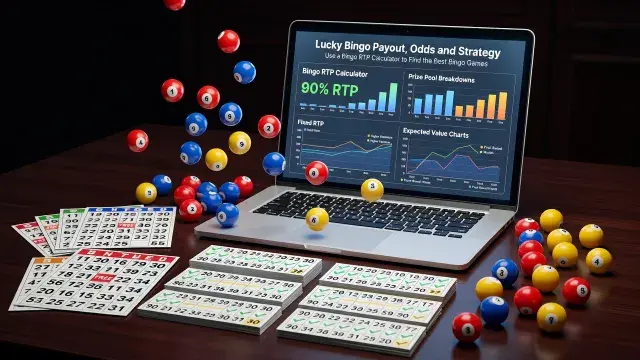
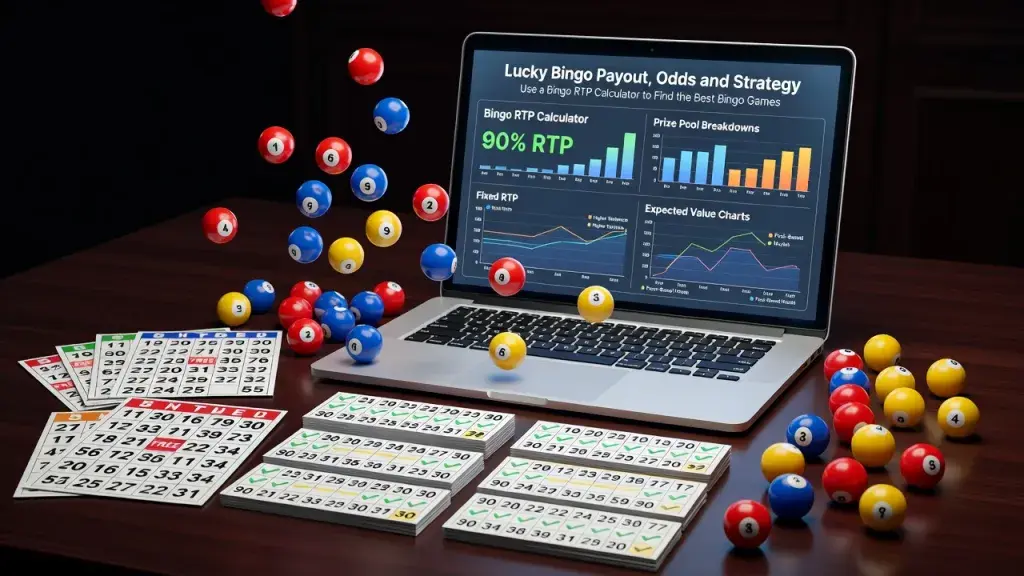
A bingo RTP calculator typically factors in ticket price, prize pool percentage, average number of players per room, and the specific win conditions of the variant. Feed it accurate numbers and it produces an expected long-term return figure, letting players compare rooms on equal footing rather than relying on marketing claims.
Reading Calculator Output Correctly
An RTP calculator output of 88% does not mean a player gets back 88% of their stake every session. It means that across a very large sample of games, the average return converges toward that figure. Short-term results swing wildly above and below this number, which is exactly why understanding variance alongside RTP matters.
Using Calculator Data to Compare Rooms
Once several rooms' RTP figures are calculated, ranking them side by side reveals which platforms consistently offer better structural odds. This comparison process is the most reliable method for identifying the best bingo games without relying on guesswork or promotional language.
Identifying the Best Bingo Games Available Today
Criteria Beyond Raw RTP
Payout percentage matters, but game speed, ticket price flexibility, and the presence of secondary prizes (line wins, patterns, jackpots) all affect actual player experience and realistic returns. A game with slightly lower RTP but faster rounds can generate more total value per hour of play.
Red Flags That Signal a Weak Bingo Room
Unclear payout disclosure, unusually large player caps with static prize pools, and the absence of any published RTP or odds information are all warning signs. Transparent platforms publish their payout structure clearly, letting players verify numbers independently rather than trusting blind claims.
Balancing Prize Size Against Winning Frequency
Larger jackpot-style bingo games attract more players and therefore dilute individual winning chances, even when the advertised top prize looks appealing. Smaller, steadier-payout rooms often deliver better cumulative results for regular players over dozens of sessions.
Frequently Asked Questions
Does buying more bingo cards actually improve my odds of winning?
Yes, in the sense that more cards mean more chances to match a winning pattern in that specific game. However, the expected value per dollar spent does not improve - you are simply increasing your stake proportionally to your chances, not gaining an edge.
Is a higher advertised RTP always better for bingo?
Not automatically. A high RTP in a room with thousands of competing players can still produce worse realistic odds than a lower RTP room with few players, because prize pools in many bingo formats are shared rather than fixed per ticket.
Can a bingo RTP calculator predict my results in a single game?
No. The calculator produces a long-term average based on large sample sizes, not a forecast for one session. Individual games can deviate significantly from the calculated figure due to normal variance.
What's the difference between ninety-ball and seventy-five-ball bingo odds?
Ninety-ball bingo pays out at multiple stages (one line, two lines, full house), spreading smaller wins more frequently. Seventy-five-ball bingo concentrates on full-card patterns, generally producing fewer but larger individual payouts.
How do I know if a bingo room's payout information is trustworthy?
Look for platforms that clearly publish their RTP figures, prize pool structure, and player caps. Rooms that hide this information or only advertise maximum possible jackpots without disclosing odds should be treated with caution.
Does session timing really affect my chances of winning?
Yes. Playing during lower-traffic hours reduces the number of competing tickets in pool-based bingo rooms, which directly improves your realistic probability of winning a share of the prize pool without changing your spend.